The December Sugar High and the January Bill: A Case for Following Through in Knoxville
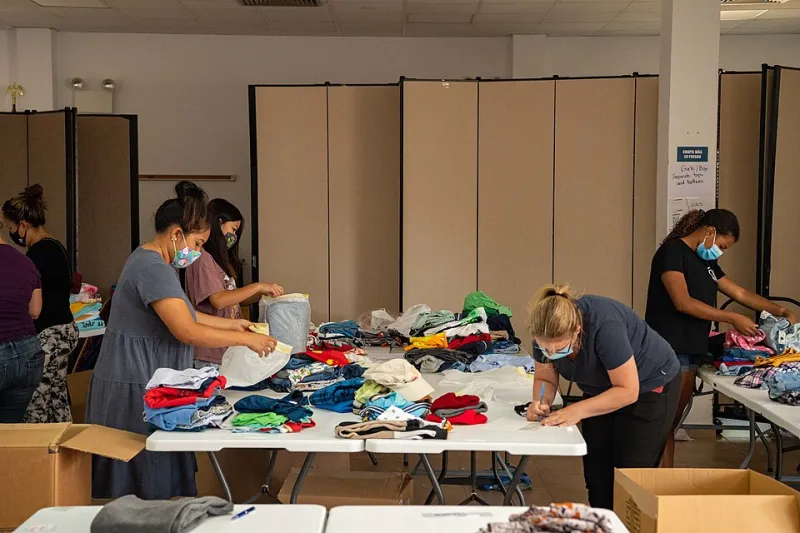
Photo: U.S. Navy photo by Petty Officer 2nd Class John Owen, Public domain, via Wikimedia Commons
Every December, Knoxville does something beautiful. Angel trees go up in church lobbies. Toy drives fill boxes in fire stations and coffee shops. Families who are struggling get a little breathing room, and kids get a morning that feels like magic. I am not here to complain about that. I am here to ask what happens next.
Because January comes. The tree comes down. The wrapping paper goes out with the recycling. And the bills that were pushed aside for the holidays show up with interest.
The Tree Is a Door, Not a Destination
Holiday generosity is good. It is also seasonal. That is not a moral failure. People give when they are reminded to give, and December is a giant reminder. The problem is that the need does not calendar itself around our giving. Rent is due in January. The electric bill climbs in the cold. The pantry gets thin after the holiday food boxes are gone. A family that received presents in December may still be short on diapers, gas, and groceries in February.
If a toy drive is the only touchpoint, the relationship ends when the wrapping paper does. That is a missed opportunity. The family was already connected. The church or nonprofit already knows the name. The harder question is whether we are willing to stay connected after the photo op.
What January Actually Looks Like
January is not a single crisis. It is a pile of ordinary ones. The car needs tires. The landlord does not care that Christmas was expensive. The utility company sends a shutoff notice. The kids go back to school, which means supplies, clothes, and the daily grind of lunches. A parent who picked up extra seasonal hours may see those hours disappear in the first week of the new year.
There is also the emotional crash. The holidays ask families to perform normalcy. Grief, job loss, and financial stress do not take a break. When the decorations come down, the house can feel emptier than it did before.
Pair the Gift With a Name
Seasonal generosity should be a door, not a destination. The simplest way to make that happen is to pair the gift with a name. Not a case number. Not an anonymous drop-off. A relationship, with clear boundaries and respect.
That might mean a congregation adopts a family for twelve months instead of one holiday. It might mean a volunteer commits to checking in once a month. It might mean a church pantry sets aside a shelf for January and February, not just November and December. It might mean a group home or a shelter gets a standing monthly delivery of paper goods and hygiene items instead of a one-time Christmas basket.
This is not about surveillance. It is about consistency. A family should not have to prove they are worthy of help by sharing every detail of their budget. They should be able to say, This month is hard, and be believed.
Concrete Ways to Follow Through
If you want to move from seasonal giving to year-round neighborliness, here are some practical starting points for Knoxville volunteers.
Volunteer in February. Food pantries often get a surge of help in November and December. By February, the volunteers are tired and the shelves are thinner. Put a recurring shift on your calendar for the months nobody thinks about.
Give unrestricted funds. A toy is lovely. A gift card to a grocery store or a general donation to a local assistance fund is more flexible. Organizations can use it for rent, medicine, gas, or whatever the family actually needs that week.
Ask partner organizations what happens after the holidays. Churches and nonprofits know their own gaps. Ask what they need in January, March, and July. Then show up with that instead of guessing.
Set a reminder for the first week of January. If you sponsored a family, check in. Not with a sales pitch. Just a text or a call from the coordinating person. Ask if the pantry is okay. Ask if the utility bill is manageable. Ask what would help now.
Host a January drive. Collect shelf-stable food, diapers, wipes, hygiene items, and paper goods after the holidays. People are cleaning out closets and resetting budgets. Give them a place to put the generosity that does not fit under a tree.
Offer practical time, not just stuff. A ride to a job interview. Help with a utility assistance application. Childcare during a shift. A few hours of yard work. These are the kinds of help that do not photograph well but change a week.
The Faith Part
Love thy neighbor is not a season. The Good Samaritan did not hand over a gift bag and ride off into the sunset. He stopped, got involved, and paid for the next step. That is the standard, and it is a high one.
None of this means we should cancel the angel trees or shame the toy drives. They are good. They are a start. But if we want to be the kind of community that actually holds people up, we have to follow the gift with a relationship. We have to show up in January. We have to remember the name after the wrapping paper is gone. That is the work. And in Knoxville, there is room for all of us to do a little more of it.