Retired Teachers, College Kids, and Folding Tables: Inside Knoxville's Church Basement Tutoring Boom
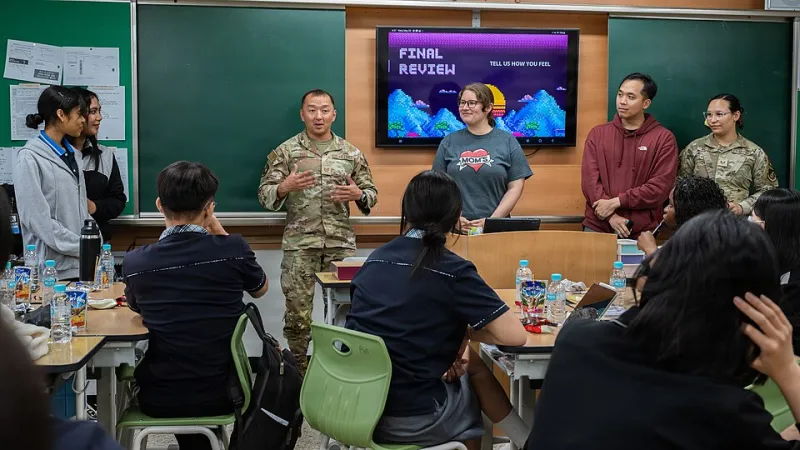
Photo: U.S. Air Force photo by Senior Airman Jessica Mun, Public domain, via Wikimedia Commons
At 3:45 on a Tuesday afternoon, the fellowship hall at Cedar Lane Presbyterian doesn't look like much. Folding tables. Juice boxes. A whiteboard someone bought at a yard sale. But by 4:00, twenty-two kids from three different elementary schools have settled in, and the real work begins.
This is the quiet answer to a problem every Knoxville parent and teacher already knows about: kids who slipped behind — especially after the pandemic years — and the lack of affordable help to catch them up. Private tutoring runs $40 to $80 an hour in most of town. The church basement charges nothing, and it's full anyway.
The Model: Retired Teachers Plus College Energy
What makes Cedar Lane's program work isn't money. It's the pairing.
On one side: retired educators like Dolores Whittaker, who taught fourth grade at a West Knoxville elementary for 31 years and now spends two afternoons a week doing what she calls "the fun part of teaching — no paperwork, no meetings, just the kid."
On the other side: University of Tennessee students, several of them earning service-learning credit, who handle the energy, the homework help, and the technology questions. The retired teachers bring the strategy; the students bring the stamina.
"I can't chase a nine-year-old around a table for two hours anymore," Whittaker laughs. "But I can tell you exactly why he's stuck on regrouping in subtraction, and Marcus over there can show him four different ways until one clicks."
The program runs Tuesday and Thursday afternoons from September through April, with a snack, a homework block, and — crucially — twenty minutes of just reading for fun at the end. Attendance hovers around 90 percent, which any after-school director will tell you is remarkable.
Why Churches Are the Right Buildings
There's a practical reason this is happening in basements and classrooms across town: churches already have the space, and it's empty between Sunday and Wednesday. They have parking. They have kitchens for snacks. And in many neighborhoods — East Knoxville, Mechanicsville, parts of South Knox — the church is the most trusted building on the block.
Parents who might hesitate to send their child to an unfamiliar program will walk them through a door they already know. That trust is not a small thing. It's the whole thing.
A Starter Checklist for Congregations
If your church has an empty classroom and a few willing hands, here's the short version of what Cedar Lane learned the hard way:
- Do background checks on every volunteer. No exceptions, including the beloved longtime member. Most programs use the same inexpensive screening services schools use.
- Start small. One day a week, ten kids, eight weeks. You can always grow. You can't un-burn-out your volunteers.
- Recruit at least one actual educator. Even one retired teacher changes everything — they know what the kids are working on and how to spot real struggles versus bad days.
- Feed them. A snack at 3:30 is the difference between tutoring and chaos.
- Talk to the schools first. Which brings us to the tricky part.
Partnering Without Overstepping
This is where faith communities need to walk carefully, and honestly, most want to. The line is simple in principle: schools teach the curriculum; churches provide the space, the snack, and the caring adult.
In practice, that means no devotional content during tutoring hours if you're serving the broader community — save the faith conversation for families who ask for it, and they often do. It means not tutoring your own congregation's kids only. It means asking teachers what students actually need instead of assuming.
Several Knoxville principals will happily connect a church program with specific skill gaps — reading fluency, math facts — without recommending individual families, which keeps the separation clean. One East Knoxville assistant principal put it this way: "When the church calls and asks what we need, that's a good day. When they show up and tell us what they're doing, that's a long meeting."
The best programs also keep records light but real: who came, what they worked on, a note for parents each week. That paper trail builds school trust fast.
The Part Nobody Puts on a Flyer
Ask Whittaker what keeps her coming back and she doesn't mention grades.
"There's a girl who couldn't look at a book without saying 'I'm dumb.' Took us four months. Now she reads aloud to the little ones on Thursdays." She shrugs. "Somebody has to sit next to a kid and tell them they're not what the test says. Somebody always did that for me."
That's the whole gospel of the church basement semester, if you want to call it that: showing up twice a week with juice boxes and patience, and letting a kid borrow your belief in them until it becomes their own.
If your congregation has a classroom gathering dust, it has a mission field. The kids are already enrolled. They're just waiting on the volunteers.