The Fix-It Table in the Fellowship Hall: Knoxville Churches Bet on Repair, Not Replacement
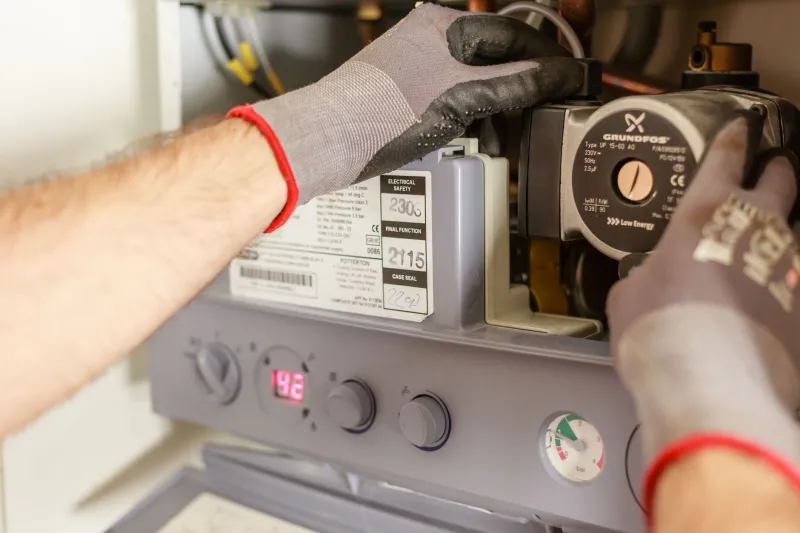
The line starts forming before the coffee is ready. A woman carries a table lamp with a frayed cord. Behind her, a man balances a toaster with a lever that will not stay down. A college student holds a winter jacket with a torn lining and a look that says she is not sure this will work.
By 9:15 on a recent Saturday morning, the fellowship hall of a Knoxville church has become something between a workshop and a waiting room. Folding tables are pushed into a U-shape. Power strips snake across the floor. A retired electrician in a worn ball cap is already squinting at a heating pad. A sewist has claimed the corner near the window, where the light is best. Someone has taped a handwritten sign to the coffee urn: One cup while you wait. Two if you are patient.
This is a repair café—part volunteer clinic, part neighborly drop-in, part quiet ministry of second chances. The idea is simple: people bring broken household items, and volunteers try to fix them for free. No receipts. No proof of need. No lecture about landfill waste unless you ask for one.
A Toaster Is a Conversation Starter
Repair cafés have been around for years, mostly in Europe and in larger U.S. cities. In Knoxville, they are showing up in church basements and fellowship halls for a reason that has less to do with appliances than with people.
A broken lamp is an easy excuse to stay home. A broken lamp that someone might fix is a reason to leave the house, sit at a table, and talk to a stranger. That matters in a city where plenty of neighbors know how to be busy and not nearly as many know how to be known.
At the fix-it table, the conversation does not start with a form. It starts with a question: What happened to it? That question opens a door. Sometimes the answer is practical—a cord chewed by a dog, a switch that quit, a seam that gave way. Sometimes it is not. The lamp belonged to a grandmother. The toaster was a wedding gift. The jacket is the only warm coat that fits.
Volunteers are not counselors, and the room is not set up for therapy. But they listen while they work. That is often the point.
Why Churches Are Choosing Repair Over Handouts
A food pantry hands you a bag. A clothing closet hands you a coat. Those are good and necessary things. A repair café does something different: it invites you to bring what you already have and sit with someone while it gets attention.
That shift matters. Charity can be a one-way street. Repair is closer to a workbench—two people looking at the same problem from different angles. One has the tool. One has the history. Both have something to offer.
For congregations, the appeal is practical. A fellowship hall already has outlets, tables, and parking. Retired tradespeople are often looking for a reason to use skills they spent decades building. Younger volunteers can learn at the elbow of someone who has rewired a hundred lamps. And the whole thing costs less than many people expect: a few parts, a modest budget for fuses and cords, and a willingness to say, We cannot fix everything, but we can try.
There is also a stewardship angle that does not require a sermon. Every item that gets repaired stays out of a landfill a little longer. Every neighbor who learns how to tighten a loose connection or replace a plug takes a small piece of know-how home. That is not just recycling. It is teaching.
Dignity at the Workbench
Good repair ministry has a few unspoken rules. The first is that nobody gets quizzed at the door. If a person brings a item, the volunteers assume it matters to them. The second is that the owner stays in the conversation when possible. This is not a drop-off counter. It is a table. The person who brought the lamp can watch the cord get replaced, ask questions, and decide whether the fix is worth it.
The third rule is honesty. Some things cannot be saved, at least not safely. A microwave with a damaged door latch. A space heater with a melted plug. A lamp with wiring that is more patch than cord. Volunteers need to be clear about what they will not touch and why. A repair café that cuts corners is not a ministry. It is a liability.
That is why the best versions of this work have a simple intake sheet, a volunteer with some electrical knowledge, and a hard rule about anything involving gas, high heat, or complicated electronics. Fix what you know. Refer what you do not. Pray with anyone who asks. Hand out a card for a local repair shop when the honest answer is this one needs a professional.
What It Takes to Launch One in Knoxville
A congregation does not need a full workshop to start. It needs a room, a date, and a handful of people who are willing to be useful.
Start with the room. Look for a fellowship hall or basement with good lighting, plenty of outlets, and tables that can be arranged so volunteers and neighbors sit side by side. Put the coffee near the door. Put the intake table just inside it.
Then recruit for skills, not titles. Retired electricians, sewists, woodworkers, bike mechanics, and anyone who has ever taken apart a vacuum cleaner without panicking. Ask them what they are comfortable fixing. Do not ask them to be experts in everything.
Set a small budget for common parts: lamp cords, plugs, fuses, thread, buttons, patches, and a few basic tools. Keep a first-aid kit nearby. Decide in advance what you will not repair. Put it on a sign.
Finally, train the welcome. The person at the door is not a bouncer. They are a host. Their job is to smile, take a name if the guest wants to give one, and help people feel like they belong in the room even if their toaster is beyond saving.
The Ministry Is in the Waiting
On that Saturday morning, the toaster with the stuck lever gets a new spring and a cleaning. The lamp gets a cord. The jacket gets a patch that does not quite match but will hold. None of it is dramatic. Nobody claps.
But the woman with the lamp stays at the table longer than she needs to. She tells the volunteer about the aunt who gave it to her. The college student asks how to sew a button back on. The man with the toaster takes a second cup of coffee and asks whether the church does this every month.
The answer, if the congregation has done its work, is yes. Not because the church is full of experts, but because it is full of neighbors who believe that a small repair can be a form of care. In Knoxville, that kind of care is not hard to find once you know where to look. Sometimes it is in a fellowship hall, behind a folding table, with a broken toaster and an open chair.