Sixty Miles Each Way, and Someone's Already in the Driveway: The Volunteer Drivers Getting Knoxville Neighbors to Chemo
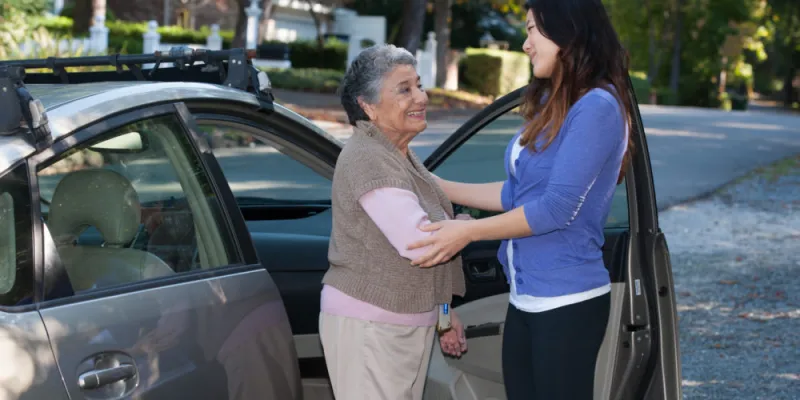
Photo: senior volunteer driver helping older woman into car morning light, via www.nadtc.org
The appointment is at 8:30 a.m. at a cancer center off Middlebrook Pike. The patient is 71, recovering from surgery, and her daughter works a warehouse shift in Alcoa that she can't miss without losing pay. A round-trip rideshare would run $60 each way — money that used to go toward groceries and copays.
So at 7:15, a silver Buick pulls into the driveway. Behind the wheel is a 68-year-old retired HVAC technician from a church in Fountain City who has never met the woman in the passenger seat. He'll drive her to treatment twice a week for the next six weeks. He'll wait in the parking lot, read the paper, and drive her home. Nobody's paying him. Nobody's filming it.
This is Knoxville's ride ministry — one of the least visible, most essential forms of neighbor-love in our city.
The Gap Nobody Planned For
Ask any oncology social worker in town and they'll tell you the same thing: transportation is one of the top reasons patients miss treatment. Not fear. Not finances. Just the simple mechanics of getting from a front door in South Knoxville or Maynardville to a treatment chair on time.
Family members want to help, but they're working. Rideshare apps exist, but a six-week course of treatment with multiple weekly visits adds up fast — and many patients in rural East Tennessee counties aren't in a coverage zone anyway. Public transit doesn't stretch to where a lot of people live.
Into that gap steps a quiet fleet of church volunteers. Some congregations run formal programs with schedulers and training. Others are just a phone tree and a man named Ray who keeps a cooler in his trunk.
'You're Not a Taxi, You're a Companion'
We talked with volunteer drivers from several Knoxville-area congregations, and the thing that surprised them most wasn't the driving. It was the waiting — and the talking.
"You learn real quick that the ride is maybe a third of what you're actually doing," one driver told us. "You're the person who's not scared of them. Everybody else in their life is worried. You're just there. You talk about grandkids, Vols football, nothing. Sometimes that's the best hour of their week."
A patient who relied on volunteer rides last year put it more plainly: "When you're that tired, having somebody show up at your door — not asking for anything, just holding the door open — you remember that. You don't forget that kind of thing."
Drivers will tell you the ministry changes them too. Several described it as the most concrete thing they've ever done with their faith. No committees, no planning meetings. Just a calendar and a person who needs to be somewhere.
How to Start a Ride Ministry (Without Reinventing the Wheel)
If your congregation has been looking for a hands-on way to serve, ride ministries are one of the most practical entry points. A few essentials:
1. Name a coordinator. One person owns the schedule, matches drivers to rides, and is the contact point for social workers or family. Without this, the program collapses in a month.
2. Screen your drivers. Background checks are non-negotiable — and they protect everyone, including your drivers. Many services run checks for under $30. Require a valid license, current insurance, and a quick reference from someone in the congregation.
3. Understand the insurance basics. Personal auto policies generally cover volunteer driving, but every driver should confirm with their agent. Some churches carry supplemental non-owned vehicle coverage for added protection. A one-hour conversation with an insurance agent now prevents a crisis later.
4. Use a simple scheduling system. A shared calendar app, a group text, or a spiral notebook in the church office — the tool matters less than having one place where every ride is logged, confirmed, and followed up on. Confirm rides the night before. Always.
5. Set expectations for drivers. No medical advice. No unsolicited theology. No commitments beyond the ride. Confidentiality — what you hear in the car stays in the car. And drivers should never feel obligated to enter a home or handle medications.
6. Build in sustainability. Rotate at least four to six drivers per patient so nobody burns out, and nobody becomes a single point of failure. One-and-done volunteering doesn't work here; patients need consistency, so recruit for the long haul.
7. Partner locally. Hospital social workers, the American Cancer Society's Road To Recovery program, and area agencies on aging all need ride partners. A phone call can connect your congregation to patients already on waiting lists.
The Part That Can't Be Scheduled
Here's what no checklist captures: the driver who learned that the quiet man in his back seat had been a school custodian for 31 years, and asked him every question he could think of about it. The woman who started keeping hard candy in her glove box because her rider mentioned it once.
Treatment is medicine. But the ride is something else — proof to a frightened person that they are not doing this alone. In a city full of needs, that's a ministry any of us could start this month, with a car we already own and a Tuesday morning we were going to spend anyway.
If your church is interested in starting a ride ministry, talk to your pastor, call a local hospital's social work office, and start with one driver and one patient. That's how all of them began.