Second Shift, Safe Hands: The Grandma Network Holding Up Knoxville's Working Parents
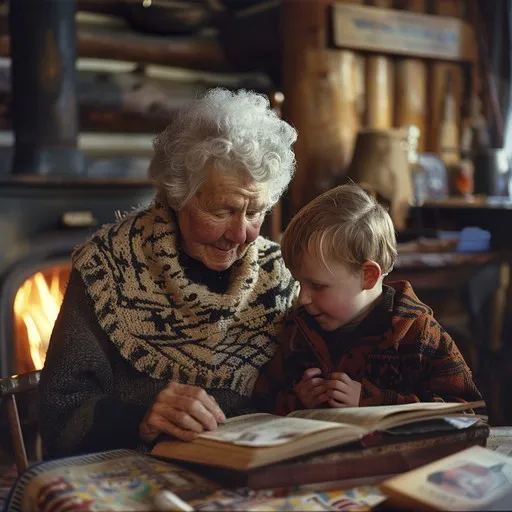
Photo: senior woman babysitting child reading together cozy home, via images.stockcake.com
On a Tuesday evening in Fountain City, while most of the city is winding down, Doreen is strapping a booster seat into her Buick. The four-year-old in the seat belongs to a single mom she met through her church's prayer list, and the mom clocked into a second shift at the hospital an hour ago. Doreen, 71, will have the boy fed, read to, and asleep by eight. She'll do it again Thursday. She hasn't charged a dime in two years.
Nobody gave her a title. There's no sign-up sheet with her name on it. But in a handful of Knoxville congregations, women like Doreen have become the backbone of an unofficial childcare network — one that's keeping single parents employed, keeping night classes within reach, and keeping a whole lot of kids in familiar, loving hands.
It Started With One Yes
Ask around and you'll hear the same origin story with different names. A young mother stands up during a Wednesday night service, embarrassed, and mentions she's about to lose her job because she can't cover the evening shift. A retiree in the third pew catches the pastor's eye after the service and says, "I can watch him."
That's how it spreads. Not through a program launch or a ministry fair, but through one yes that makes the next yes easier.
"I raised three kids and helped with seven grandbabies," Doreen told us. "What am I going to do, say no? I've got the time. She doesn't. That's the whole math of it."
The math is bigger than one church, though. Knoxville has thousands of working parents juggling shifts that don't line up with daycare hours — hospital workers, restaurant staff, warehouse crews, certified nursing assistants. Traditional childcare often closes at six. Second shifts start at three. Somewhere in that gap, families either find help or fall behind.
How the Trust Gets Built
The obvious question: how does a stranger end up watching someone's child? The short answer is she doesn't stay a stranger.
In the churches where this works, the arrangement runs through relationships, not advertisements. A pastor or ministry leader makes the introduction. The parent visits the sitter's home first, with the kid. Background checks get run through the church's volunteer screening — many congregations already do this for youth ministries, so the infrastructure exists. References come from people both parties actually know.
One coordinator at a South Knoxville congregation described it as "the old way, with guardrails." Her grandmother kept neighbor kids sixty years ago; the difference is that today's version includes a background check, a check-in text protocol, and an honest conversation about allergies, bedtimes, and what to do if the parent's shift runs long.
The guardrails matter, and the women we spoke with were quick to say so. This is not a system that works on vibes. It works because somebody accountable — usually a longtime member with standing in the congregation — vouches for both sides, and because the same small group of trusted women does this consistently, week after week. Reputation is the currency, and in a church community, everybody knows the exchange rate.
What the Grandmas Get Out of It
It would be easy to frame this as pure sacrifice, and the women themselves would wave that off. Several mentioned the same things: purpose, company, a reason to get dressed. One told us the Tuesday-night boy has "become like a bonus grandbaby." Another said the gig pulled her out of a spell of loneliness after her husband died that she's not sure she'd have climbed out of otherwise.
There's a lesson in that for anyone organizing volunteers. People don't just want to be asked to help — they want to be asked for something they're actually good at. Nobody had to train these women to care for children. Sixty years of experience did that. The church's job was simply connecting supply to demand.
A Blueprint If You Want to Start One
If your neighborhood or congregation wants to try this, the women and coordinators we spoke with offered a pretty consistent playbook:
- Start with a listening phase. Ask parents, plainly, what hours they need covered. Don't assume it's Sundays.
- Recruit from experience. Look for retirees, empty-nesters, and former teachers or nurses. Ask them directly — most are waiting to be asked.
- Use existing screening. If your church background-checks youth volunteers, extend that process. If not, start there.
- Make warm introductions. No cold matching. A pastor, ministry leader, or mutual friend should sit down with both parties first.
- Set expectations in writing. Hours, allergies, emergency contacts, payment (usually none, sometimes gas money). Clarity protects everyone.
- Check in monthly. A quick follow-up from the coordinator keeps small problems from becoming big ones.
The whole thing runs on maybe ten hours of organizing a month, most of it at the front end.
The Nearest-Neighbor Test
There's a verse that gets quoted a lot in volunteer circles — the Good Samaritan, the man who crossed the road when everyone else crossed to the other side. What strikes us about the grandma network is how un-dramatic its version of that story is. Nobody carried anyone to an inn. They just showed up on a Tuesday, warmed up some spaghetti, and made it possible for a mom to keep her job.
That's neighborliness at street level. And if a Buick in a Fountain City driveway can carry it, there's probably a version of it waiting in your neighborhood too.