The Quiet Arithmetic of Diapers: Inside Knoxville's Basement Ministries

Photo: Ken Crawford, CC BY-SA 3.0, via Wikimedia Commons
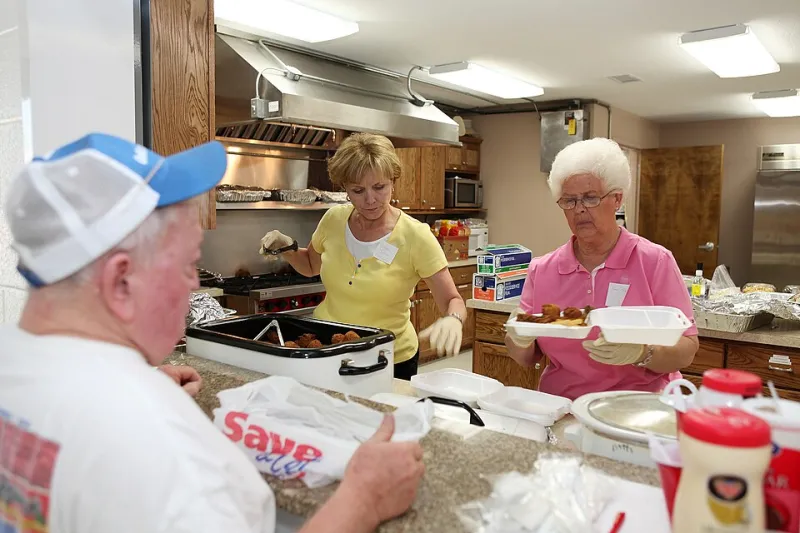
On a Tuesday morning in a church basement off Broadway, the work looks almost boring. Two volunteers sit at a folding table with boxes of diapers stacked behind them. One calls out a size. The other counts, bundles, and writes the number on a clipboard. There is no ribbon cutting, no photo op, no sermon. Just diapers moving from a shelf to a bag that will go home with a Knoxville family before lunch.
That is the thing about diaper need. It does not announce itself. It hides in the bottom of a diaper bag, in a parent's quick calculation at the store, in the decision to stretch the last few diapers until payday. It shows up in churches and community centers as a quiet request, often phrased with an apology.
Why Diapers Do Not Show Up on the Prayer List
Most public benefit programs do not cover diapers. SNAP helps with food. WIC helps with specific nutrition needs. Neither buys the thing a baby needs several times a day. National diaper bank advocates often point to a rough estimate that one in three families with young children struggles to afford enough diapers. In Knoxville, that number is not abstract. It is the parent who stays home because the diaper bag is empty. It is the toddler who cannot go to daycare because the center requires a supply of diapers, and the family cannot provide one.
Diaper need also has a way of pushing out other needs. When money is tight, diapers compete with rent, medicine, gas, and food. Parents skip things for themselves. Older siblings wear clothes that no longer fit. The crisis is real, but it rarely gets a headline because it feels private. No one wants to stand in a line and say out loud that they cannot afford diapers.
What It Looks Like in a Church Basement
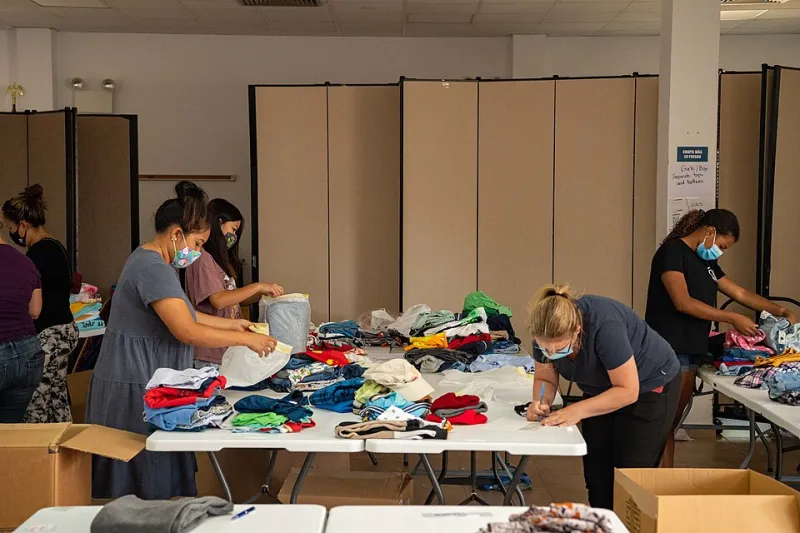
The ministries that do this work tend to be small and stubborn. A congregation sets aside a closet. Someone volunteers to keep inventory. Another person picks up donations from a diaper drive at a school or a baby shower gone generous. The diapers are sorted by size, because size matters more than brand. Newborn packs sit next to size 5s and pull-ups. Wipes are counted separately. Boxes are labeled with a marker.
The distribution side is often just as low-key. Some churches hand diapers to families who come to a food pantry. Others partner with a pregnancy center, a school nurse, or a neighborhood nonprofit. A few deliver to homes. The common thread is not a big storefront. It is a simple agreement: ask for a size, hand over what is available, and do not make a production of it.
Volunteers will tell you the same thing again and again. The need is steady. Sizes 4, 5, and 6 disappear fast. Pull-ups are always wanted. Wipes are gold. And the families are not strangers from a statistic. They are neighbors who live a few streets over, who work, who parent, who are doing their best with a bill that does not go down.
The Shame Is the Real Lock on the Door
A diaper ministry can have shelves full of supplies and still struggle if asking feels humiliating. That is why the best ones are careful about the front door. They keep intake simple. They do not require a long form or a proof of income for a pack of diapers. They train volunteers to be discreet. They do not ask why the family needs help. They ask what size the child wears.
Faith is part of this, but it does not need to be loud. A church basement is not a lecture hall. The ministry is a practical expression of the idea that a neighbor is a neighbor, especially when the need is ordinary and embarrassing. A parent who leaves with diapers and dignity intact is more likely to come back when something else goes wrong. That relationship is the real long game.
How a Small Ministry Starts Without a Big Budget
You do not need a warehouse to begin. You need a coordinator, a dry closet, and a few people who will show up on a regular schedule. Here is a simple starting point.
Pick one coordinator and two backups. The work is not heavy, but it is recurring. One person should own the inventory and the schedule. Two backups keep the ministry from collapsing when someone gets sick or goes on vacation.
Decide how families will get diapers. Partnering with an existing pantry or family service organization is usually smarter than opening a standalone distribution. The partner already sees families with young children. You bring the supplies and the volunteers.
Store by size, not by brand. Shelving or sturdy bins help. Keep the area dry and pest-free. Label every box. A simple inventory sheet on a clipboard is enough. Track what leaves so you know what to ask for next.
Keep the rules simple. Ask for the child's size and how many diapers are needed. Offer wipes if you have them. Do not require income proof for a basic need. Protect privacy. A clipboard with first names only is often enough.
Recruit sorters, not just donors. A two-hour sorting shift is a good entry point for volunteers who cannot commit to a weekly role. Teenagers can help count and bundle with supervision. Retired neighbors can pick up donations. The work is approachable.
Ask for recurring gifts. Diaper drives are great, but a monthly gift or a standing bulk order keeps the shelves from going bare. Many communities have a regional diaper bank or bulk purchasing connection. Use it.
The Count Is Not the Point
At the end of the morning, the clipboard has numbers on it. Forty-eight size 4s. Twenty-two pull-ups. Six packs of wipes. The numbers matter because they tell the coordinator what to buy next. But they are not the point.
The point is the parent who does not have to choose between diapers and dinner. The point is the volunteer who learns a neighbor's name and remembers it. The point is a church basement doing quiet, unglamorous work that no one claps for. In Knoxville, that work is happening one folded table at a time. If you have a closet, a clipboard, and a few hours, you are closer to starting than you think.